
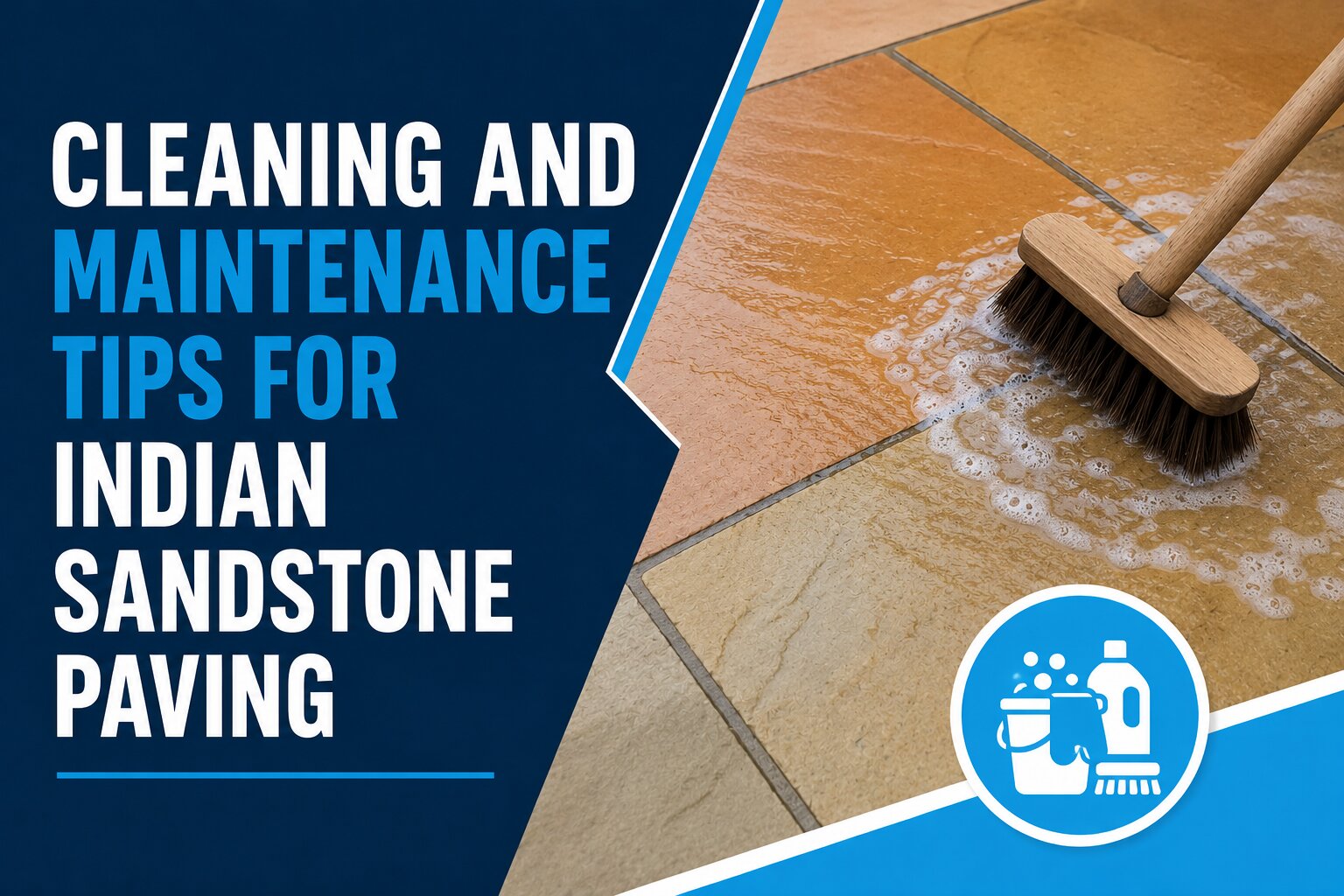
How to Clean Indian Sandstone Paving (UK Tips)
Quick answer: Indian sandstone needs regular sweeping, a pH-neutral or biocide cleaner applied with a stiff brush, thorough rinsing, and ideally a penetrating sealer once fully dry. Avoid brick acid, high-pressure jet washing near loose joints, and sealing over efflorescence. Re-clean every six to twelve months depending on your garden's conditions.
Indian sandstone is one of those materials that looks absolutely stunning on day one. The warm, earthy tones, the natural riven texture, the way it catches the evening light — it's no wonder it's one of the most popular patio choices across Greater Manchester. Then autumn arrives, the rain sets in, and six months later you've got a patchwork of green algae, black spots, and mysterious white blooms that weren't in the brochure.
The good news? None of that is permanent. With the right approach, the right products, and a realistic understanding of what Indian sandstone actually is, you can keep it looking genuinely great year after year. This guide covers everything — cleaning methods, common problems, pressure washing (done safely), joint repairs, and sealing — so you can make confident decisions rather than expensive guesses.
We're JW Paving, based in Altrincham, and we install and maintain natural stone patios across Greater Manchester. We've seen every version of neglected sandstone imaginable. Here's what actually works.
What makes Indian sandstone different (and why it needs the right approach)
Indian sandstone is a natural, porous material. That's what gives it its character — the subtle colour variation, the texture, the way it absorbs light — but it's also what makes it more demanding to look after than, say, porcelain.

Because it's porous, it absorbs water, organic matter, and cleaning products. That means harsh chemicals like brick acid or hydrochloric acid can permanently damage the surface and bleach the colour. High-pressure jet washing can erode the surface layer and tear out the roots of biological growth, making future regrowth worse. And if the drainage underneath isn't right — something that's often overlooked during installation — water sits under the slabs and accelerates everything you're trying to avoid.
The approach that works is always: gentle but consistent.
Before you start: quick checks that save headaches later
Before reaching for the hose, take five minutes to assess what you're actually dealing with.
Identify your stains. Green or brown slippery patches? That's algae or lichen. Black peppered dots? Black spot fungus — the persistent one. White powdery bloom, especially on newer patios? That's efflorescence. Orange-brown streaks? Rust, usually from metal furniture. Greasy marks? BBQ season has a lot to answer for.
Check the joints. Cleaning often reveals — or accelerates — failing jointing. If the sand or mortar is crumbling, loose, or missing in places, address that after cleaning, not before.
Pick your moment. Ideally, clean during a dry spell with mild temperatures. Avoid frost (products won't activate properly) and heavy rain (you'll just be washing everything straight off before it's had time to work).
And always, always do a patch test in a hidden area before applying any product to the full surface.
Everyday Indian sandstone maintenance
The simplest thing you can do for your patio is sweep it regularly. Leaf litter, soil, and organic debris build up quickly in riven textures, and that's what feeds algae and lichen growth. A quick sweep every week or two makes a real difference.
When positioning garden furniture, use rubber or plastic feet rather than bare metal. Metal plus moisture equals rust stains. Lift planters periodically to prevent persistent damp patches underneath, and if you use a BBQ directly on the patio, put something down to catch grease splashes.
None of this is revolutionary. But it's the kind of routine that means your annual clean is a refresh rather than a recovery operation.
How to clean Indian sandstone: step by step
This method works for general cleaning and most algae or organic growth. For specific stain types, we cover those in the next section.

What you'll need: stiff-bristled brush (nylon, not metal), a bucket, a watering can or garden hose, appropriate cleaner, PPE (gloves and eye protection if using a biocide), and a plastic scraper for stubborn spots.
Dry sweep thoroughly. Remove loose debris before any water goes down, or you'll just be pushing grime around.
Pre-wet the surface. A light rinse before applying cleaner prevents the product from absorbing unevenly into dry stone. It also helps the cleaner dwell on the surface longer.
Apply your chosen cleaner. Follow the manufacturer's dilution instructions carefully. Apply evenly — a watering can works well for this.
Agitate with a stiff brush. Work in sections and keep the surface wet. Don't let the product dry out on the stone.
Rinse extremely thoroughly. This is the step people underdo. Multiple passes with clean water, making sure no cleaning residue is left behind. Residue left on sandstone can cause staining or interfere with any sealer you apply later.
Repeat if needed, then allow to dry fully before moving to sealing.
What is the best cleaner for Indian sandstone in the UK?
Rather than recommending specific brands (availability and formulations change), here's a practical guide by stain type:
Green algae and slippery growth: A dedicated biocide or algae remover is your best option. These kill the growth at the root rather than just bleaching the surface. Expect the affected area to continue dying back over a few weeks after treatment.
Black spot: Specialist black spot removers exist and are worth using, but manage expectations — black spot is tenacious. It often requires repeated treatments over time. Don't increase the chemical concentration hoping for faster results; you'll risk damaging the stone.
General grime and dirt: A pH-neutral stone cleaner is the safest all-round option. It lifts dirt without affecting the stone's structure or colour.
Grease and oil: Absorb as much as possible first with cat litter or bicarbonate of soda, then use a stone-safe degreaser.
White bloom (efflorescence): Avoid acid-based cleaners entirely here — they can cause permanent damage. A stiff brush and clean water is usually sufficient, as efflorescence typically resolves on its own within a few months.
What to avoid: brick acid, hydrochloric acid, and undiluted bleach. Bleach won't necessarily destroy sandstone, but it can discolour it and it's harmful to surrounding plants. For natural stone, it's never the first choice.
Not sure what you're dealing with? We're always happy to take a look and advise — sometimes a quick chat saves a weekend of trial and error. Give us a ring on 0161 3900491 or drop us an email at [email protected].
Can you pressure wash Indian sandstone?

Yes — with caveats.
When done correctly, pressure washing is an efficient way to rinse and clean Indian sandstone. The key word is correctly. Use a fan-tip nozzle (25–40 degree angle), keep the pressure at a low-to-medium setting (no higher than around 1,500–2,000 PSI for sandstone), maintain a distance of around 18–24 inches from the surface, and keep the nozzle moving steadily. Never linger in one spot.
When not to pressure wash: if your joints are loose, crumbling, or filled with kiln-dried sand, high pressure will blast the jointing out entirely. In that case, clean by hand, then sort the joints.
Re-pointing and joint repairs: the bit people skip
Clean paving with failing joints is a bit like washing your car with a flat tyre — it looks better briefly, but the underlying problem hasn't gone away.
After cleaning, check the joints carefully. If sand is washing out, mortar is cracking, or you've got weeds establishing themselves in the gaps, it's worth re-pointing before doing anything else. Healthy joints mean better stability, improved weed resistance, and less water ingress underneath the slabs.
For DIY, brush-in jointing compounds are the most manageable option. Traditional sand and cement mortar gives a more durable finish but requires more skill and is unforgiving if you get it wrong. If the patio is showing wider structural issues — sinking, rocking slabs, persistent drainage problems — that's when it's worth calling us in for a proper assessment.
Sealing Indian sandstone paving: is it worth it?
In a word: yes, for most people. But understanding what sealing does (and doesn't do) will save disappointment.
A good penetrating (impregnating) sealer soaks into the stone rather than sitting on top of it, creating an invisible barrier that resists oil, stains, and moisture without changing the appearance significantly. A colour-enhancing sealer will deepen the tones — worth considering if your sandstone has faded.
What sealing won't do: make it maintenance-free or compensate for poor drainage underneath. It also won't permanently stop algae. What it will do is make cleaning significantly easier because grime sits on the surface rather than soaking in.
Timing matters. Only seal when the stone is completely dry — ideally after a few days of dry weather. Don't seal over efflorescence; let it resolve first. Re-seal every one to two years depending on foot traffic and exposure.
Frequently asked questions
How often should I clean Indian sandstone?
For most patios in Greater Manchester, a thorough clean once or twice a year is realistic — once in spring to clear winter buildup, and optionally again in early autumn. Regular sweeping in between makes each clean much easier.
What's the safest way to remove algae from sandstone?
Use a dedicated biocide or algae remover, applied with a stiff brush and rinsed thoroughly. Allow a few weeks for the treated growth to fully die back. Routine biocide treatments every six to twelve months will slow regrowth significantly.
Can I use bleach or brick acid on Indian sandstone?
Brick acid and hydrochloric acid should never be used on Indian sandstone — they can permanently damage the surface and strip colour. Bleach is less catastrophic but still not recommended; it can discolour the stone and harm nearby plants. pH-neutral or specialist stone cleaners are always the safer choice.
Why has my sandstone gone white after cleaning or installation?
That's almost certainly efflorescence — salts migrating to the surface as moisture evaporates. It's a natural process, especially on newer patios, and in most cases it resolves on its own within a couple of months. Gentle brushing with clean water can help. Avoid acid-based cleaners, and don't seal over it until it's fully gone.
Will sealing Indian sandstone stop black spot coming back?
A quality impregnating sealer will make the surface less hospitable for black spot, but it won't eliminate it entirely. Sealing combined with regular biocide treatments and good drainage gives you the best chance of keeping it under control.
How long should I wait before sealing after cleaning?
The stone needs to be completely dry — typically at least 48–72 hours of dry weather after cleaning, sometimes longer depending on temperature and how absorbent the stone is. Sealing damp stone traps moisture inside, which causes more problems than it solves.
Can pressure washing damage the jointing compound or mortar?
Yes, especially if the joints are already compromised or were filled with kiln-dried sand. If your jointing is in good condition and you use the correct pressure setting and nozzle, it should be fine. If you're unsure, clean by hand and assess the joints first.
When is it better to call a professional?
If the patio has sunken or rocking slabs, persistent drainage issues, widespread joint failure, or staining that hasn't responded to multiple treatments — those are signs the problem goes beyond surface cleaning. We're happy to take a look and give you an honest assessment before you spend money on products that won't fix the underlying issue.
How we help at JW Paving
We handle everything from full patio installations to one-off repairs, re-pointing, and natural stone restoration across Altrincham, Sale, Hale, Bowdon, Timperley, Didsbury, and the wider Greater Manchester area. If your sandstone patio needs more than a clean — or if you'd simply like a second opinion before spending a weekend on it — we're straightforward people who'll give you an honest answer.

