
Is Porcelain Paving Slippery When Wet? The truth about patio safety
You've finally decided to upgrade the garden. You've got the vision: a sleek, modern patio where you can sip your morning coffee or host the ultimate summer barbecue. You’ve been scrolling through Pinterest, and porcelain paving has caught your eye. It looks stunning, it’s durable, and it’s undeniably trendy.
But then, a little niggle of doubt creeps in. You picture running out to grab the washing when the heavens open (as they often do in the UK), and suddenly, your dream patio turns into an ice rink. You’re left wondering: is porcelain paving slippery when wet?
It’s a valid concern. Nobody wants to turn their garden path into a hazard zone. At JW Paving, we’ve laid countless patios across Altrincham and beyond, and this is one of the most common questions we get asked. So, let’s slide right into the truth about porcelain paving and safety.
What is porcelain paving?
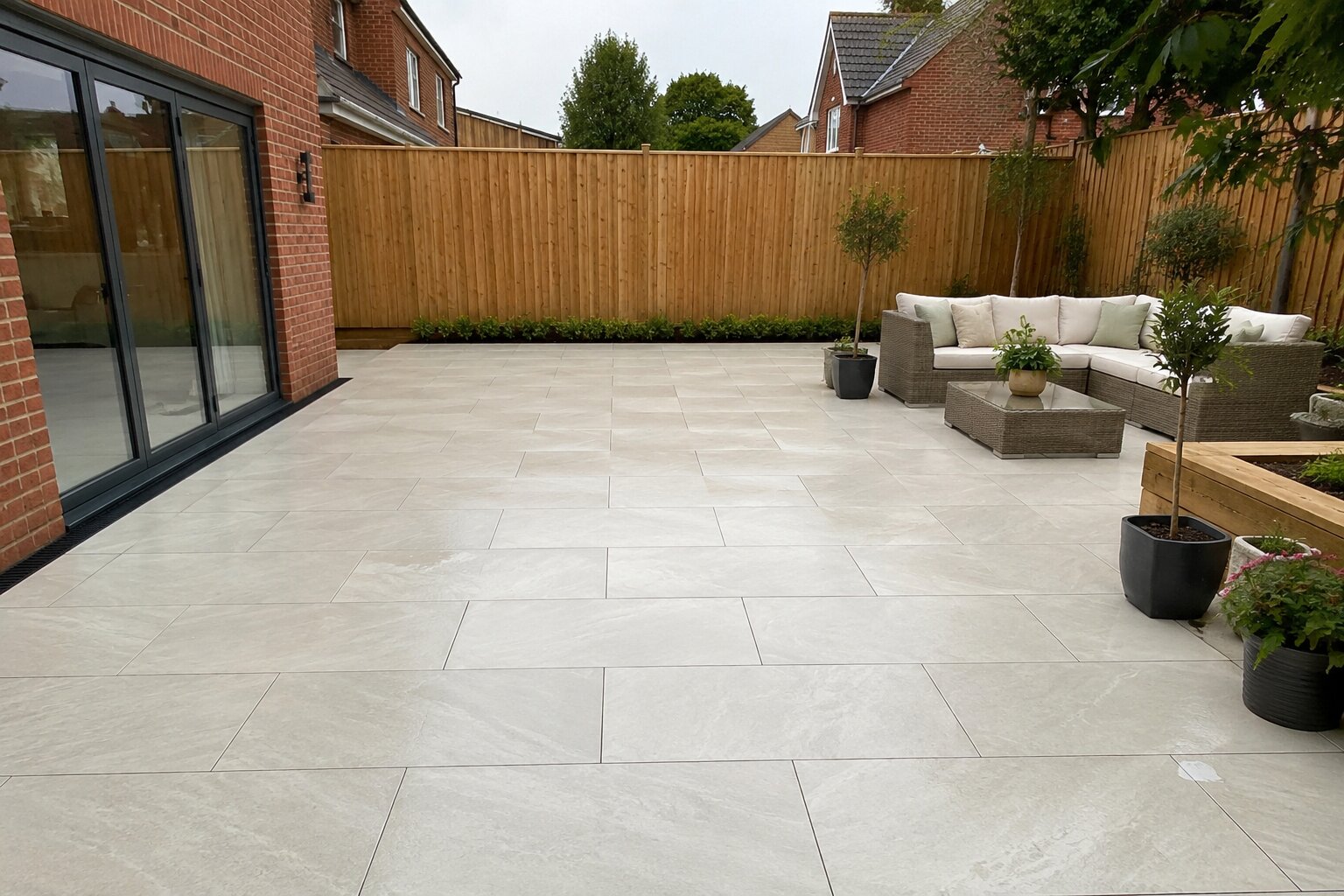
Before we tackle the slip factor, let’s quickly cover what we’re actually dealing with. Porcelain paving isn't just a standard kitchen tile thrown outdoors. It is a man-made product created from a mix of clay, sand, and minerals, baked at incredibly high temperatures.
This process, known as vitrification, makes the tiles incredibly dense and hard-wearing. Unlike natural stone, which can be porous, porcelain has a water absorption rate below 0.5%. This is great news for frost resistance and keeping moss at bay, but it leads to the big question: if it doesn't absorb water, does the water just sit on top and send you flying?
Is porcelain paving inherently slippery?
Here is the short answer: Not if you choose the right type.
If you were to take a polished, high-gloss porcelain tile meant for an indoor bathroom and stick it in your garden, then yes, you would essentially be building a water slide. However, outdoor porcelain paving is designed specifically to handle the elements.
Manufacturers are well aware of the British weather. To combat the slip risk, external porcelain tiles are created with a textured surface. This texture provides "grip" for your shoes (or bare feet), creating friction even when the surface is wet.
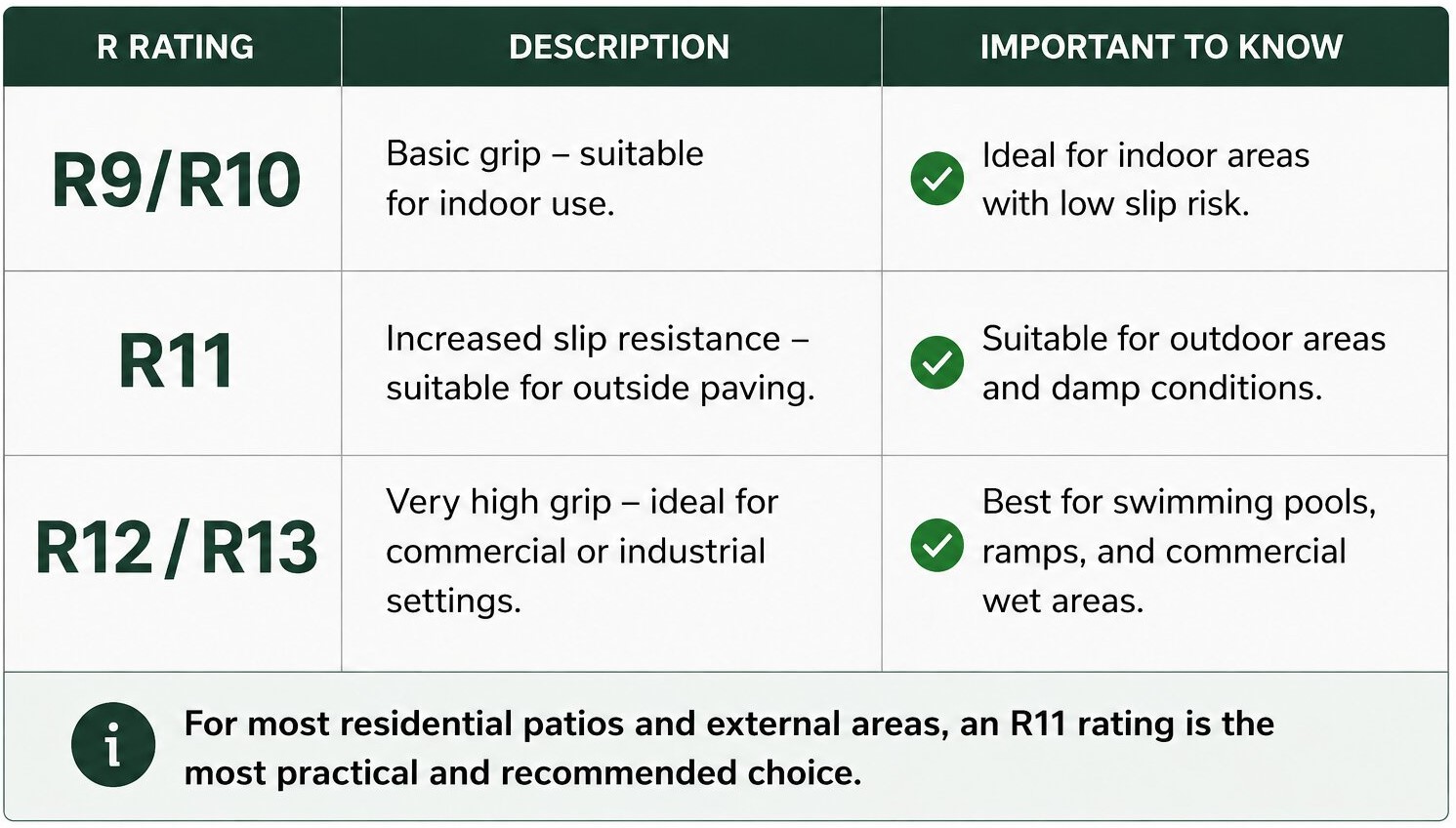
Understanding the "R" rating
When you’re shopping for paving, you might see an "R" rating. This stands for "Ramp Test," a standardised measure of slip resistance (DIN 51130).
Factors affecting slipperiness of outdoor porcelain tiles
Even with a high-quality R11 tile, a few external factors can turn a safe surface into a slippery one. It's rarely the tile's fault alone.
Surface texture
We touched on this, but it bears repeating. Smooth surfaces provide less friction. If you opt for a "honed" or "polished" finish for outdoor use, you are increasing your risk. Always look for words like "textured," "structured," or "anti-slip" in the product description.
Water and drainage
Since porcelain paving waterproofing is so effective (meaning it doesn't soak up water), the water has to go somewhere. If your patio is laid completely flat, rainwater will pool on the surface. Standing water sits between your shoe and the tile, reducing friction—this is known as hydroplaning on a micro scale.
Professional installation is crucial here. At JW Paving, we ensure all porcelain patios are laid with a subtle, adequate "fall" (gradient) to ensure rainwater runs off into drainage channels or garden beds, keeping the surface drier and safer.
The green enemy: algae and moss
This is the silent assassin of garden safety. Over time, particularly in shaded areas, a microscopic film of algae or slime can build up on paving. It doesn't matter how textured your tile is; if it's covered in green slime, it's going to make your porcelain paving slippery.
Because porcelain is non-porous, algae doesn't root into the tile like it does with sandstone, but it can still grow on the surface if organic debris (leaves, soil) is left to rot.
Measures to reduce slipperiness of your porcelain paving slabs
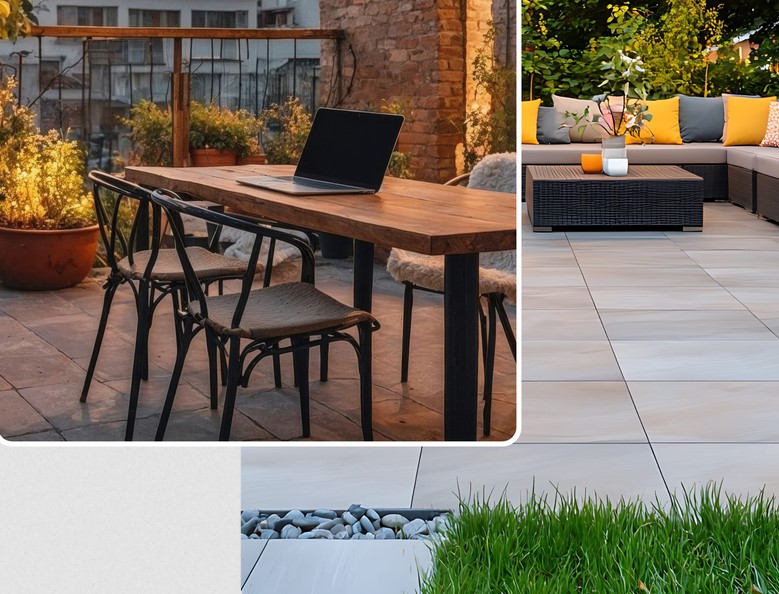
So, how do you ensure your garden remains a safe haven rather than a danger zone? Here are a few proactive steps.
Choose textured porcelain paving tiles
This is your first line of defense. When we discuss options with our clients, we always recommend textured porcelain paving suitable for gardens. These tiles often mimic the grain of natural stone or wood, providing that essential mechanical grip.
Anti-slip treatments
If you have already installed smooth tiles and are regretting it, don't panic. There are chemical anti-slip treatments available. These coatings work by creating microscopic roughness on the tile surface.
Pros: Can significantly improve grip without ripping up the patio.
Cons: They can sometimes slightly alter the look of the tile (making it less shiny), and they aren't permanent—you may need to reapply them every few years.
Proper drainage
We can't stress this enough: installation matters. A DIY job that leaves puddles is a recipe for a slip. Ensuring your patio has the correct fall and drainage points is vital. If you are noticing persistent puddles, it might be time to call in the pros to look at drainage solutions.
Regular cleaning of outdoor porcelain paving
The beauty of porcelain is that it is low maintenance, not no maintenance. A quick sweep to remove wet leaves and an occasional wash down with warm soapy water or a dedicated porcelain cleaner will stop that slippery biofilm from forming.
Alternatives to porcelain slabs
If you are still nervous about the "wet tile" effect, or perhaps the modern look of porcelain isn't quite right for your period property, there are plenty of porcelain paving alternatives that offer excellent natural grip.
Natural stone paving
Riven sandstone or limestone has a naturally uneven, split surface. This texture provides fantastic grip. However, be aware that natural stone is porous, so it can be more susceptible to algae growth if not sealed and maintained.
Concrete paving
Modern concrete pavers come in a vast array of finishes. Textured concrete flags are specifically designed to be non-slip and are a very practical choice for high-traffic areas or driveways.
Gravel
It might seem simple, but gravel is one of the most slip-resistant surfaces available. It’s permeable (so no puddles) and the shifting stones provide excellent traction. It can be a great option to break up areas of paving.
Why expert installation matters
Choosing the right tile is only half the battle. How it is installed plays a massive role in how safe and durable your patio will be. Whether it's calculating the correct fall for drainage or advising on the best R-rating for your specific garden layout, professional insight is invaluable.
At JW Paving, we don’t just lay flags; we create safe, functional, and beautiful outdoor living spaces. If you're in Altrincham or the surrounding 30-mile radius, we can help guide you through the pros and cons of every material.
Frequently asked questions
Is textured porcelain paving less slippery than smooth porcelain paving?
Absolutely. Textured porcelain is specifically manufactured to provide friction and grip underfoot. Smooth or polished porcelain should generally be avoided for external paving unless it has a specific anti-slip coating applied.
How can I test the slip resistance of porcelain paving?
The most reliable way is to check the manufacturer's "R" rating (aim for R11). If you are in a showroom, ask for a sample. A practical (though unscientific) test is to wet the sample and run your thumb over it. If your thumb slides easily with no resistance, your foot likely will too.
What is the best way to clean porcelain paving to maintain its slip resistance?
Regular sweeping to remove organic debris is key. For a deeper clean, use a pressure washer on a low setting (don't blast the joints!) or a dedicated porcelain cleaner. Avoid wax-based cleaners, as these can leave a slippery residue.
Is porcelain paving low maintenance?
Yes, porcelain paving is considered a low maintenance paving material compared to other types of outdoor surfaces. Its non-porous nature makes it resistant to staining, moss, and algae growth, reducing the need for regular deep cleaning. Occasional sweeping and rinsing with water are usually sufficient to keep it looking pristine. Additionally, porcelain tiles are highly durable, resistant to scratches, and do not require sealing, further simplifying upkeep. However, ensuring proper installation and care, such as using appropriate cleaning products, will help maintain its appearance over time.
Are anti-slip treatments permanent, or do they need to be reapplied?
Most topical anti-slip coatings are not permanent. Depending on foot traffic and weather exposure, they typically need to be reapplied every 3 to 5 years. Always check the product label for specific longevity guidance.
Ready to transform your outdoor space?
Porcelain paving is a fantastic choice for modern gardens—stylish, strong, and safe, provided you choose the right texture and install it correctly. Don't let the fear of a slippery surface stop you from getting the patio of your dreams.
If you are looking for advice on the best materials for your home, or need a team of experts to handle your paving project, we are here to help.
Get in touch with JW Paving today to discuss your project and get a free, no-obligation quote. Let's make your garden beautiful—and safe—rain or shine.

