
Can I Lay Porcelain Tile Over Concrete? (A Patio Guide)
You look at your tired, stained concrete slab and then look at those sleek, modern porcelain tiles you've had your eye on. The temptation to simply stick one on top of the other is incredibly real. It seems like a brilliant shortcut to a garden transformation, saving you the hassle of breaking up old concrete, hiring skips, and hauling away heavy debris.
But replacing a patio is rarely as simple as it looks on the surface. We get asked all the time if overlaying an old slab is a viable option for UK gardens. It makes sense on paper, but outdoor tiling comes with a specific set of challenges.
So, can I lay porcelain tile over concrete? The short answer is yes, sometimes you can. However, the long answer is that porcelain is a premium product, and it simply won't forgive a dodgy base. In this guide, our team at JW Paving will walk you through exactly when you can keep your existing slab, the crucial preparation steps you cannot skip, and when it is far safer to start from scratch.
Why porcelain is so popular for patios
Porcelain paving has completely changed the landscaping game over the last few years. Unlike traditional natural stone, porcelain is fired at incredibly high temperatures, making it highly dense and virtually non-porous. This means it absorbs almost no water, making it incredibly resistant to stains, moss, and algae.
Beyond being easy to clean, it offers a stunning, contemporary finish that brings a touch of luxury to any outdoor space. That being said, because it is so dense, it requires specific installation techniques and materials to survive the unpredictable UK climate.
So, can you lay outdoor porcelain tile on a concrete floor/concrete slabs?
To determine if your existing concrete is up to the job, you need to play detective. We run through a specific checklist when we assess a site for a client in Altrincham, Sale, or the surrounding areas. Here is what good concrete looks like:
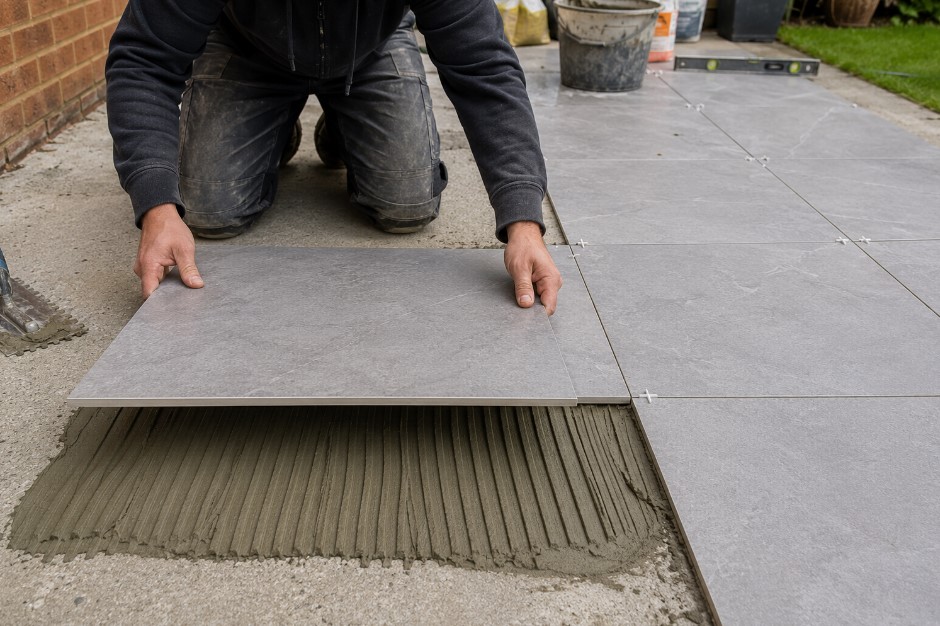
Soundness: The surface must be completely solid. If the concrete is crumbling, flaking, or sounds hollow when you tap it, it is not a suitable base.
Flatness: Large-format porcelain tiles need a very flat surface. If your concrete is wavy and uneven, you will end up with 'lippage', where the edges of the adjacent tile surface sticks up and creates a tripping hazard.
Cracks: Hairline cracks are usually fine, provided the concrete isn't actively moving. Structural cracks, however, will eventually telegraph right through to your beautiful new tiles.
Falls and drainage: Your concrete must have a slight slope (a 'fall') that directs rainwater away from your property. If water pools in the middle of the slab, that is a major red flag.
Contamination: Paint, oil spills, dirt, and old sealers will stop tile adhesive from bonding properly.
Moisture issues: Trapped moisture beneath a slab can cause huge problems when it freezes and expands during winter.
If you are nodding along to this list because your concrete is perfectly flat, solid, and sloping in the right direction, you are probably fine. If you are wincing, keep reading.
The biggest risks of tiling over existing concrete
Ignoring a poor sub-base is a fast track to a ruined patio. The biggest risk we see is debonding, where the tiles simply pop off the concrete because the adhesive couldn't grip the surface. Frost damage is another major culprit. If water sits beneath the tiles and freezes, the expansion will lift and crack the porcelain.
Another common disaster is raising the ground level too high. If adding a layer of adhesive and a 20mm porcelain tile breaches your home’s damp proof course (DPC) or blocks your air bricks, you are inviting serious damp issues into your house.
Key prep: how to prepare a concrete base properly for porcelain paving
If your slab passes the initial checks, proper porcelain tile prep is your next hurdle. Skipping these steps will almost certainly lead to failure.
1. Clean it properly
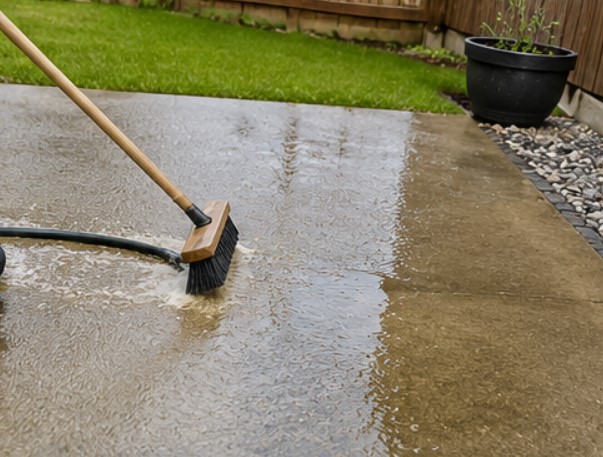
You cannot stick tiles to dirt. Pressure wash the entire slab to remove algae, moss, and loose debris. If there are grease or oil stains, you will need to use a heavy-duty degreaser.
2. Check levels and falls
Use a long spirit level to ensure water flows away from the house. A standard fall for outdoor paving is around 1:60 to 1:80. If the water runs towards your brickwork, do not lay tiles on it.
3. Repair and stabilise
Fill any minor hairline cracks with a suitable epoxy or repair compound. If there is a risk of slight movement, installing a crack isolation membrane between the concrete and the tiles can add a valuable layer of protection.
4. Prime the base
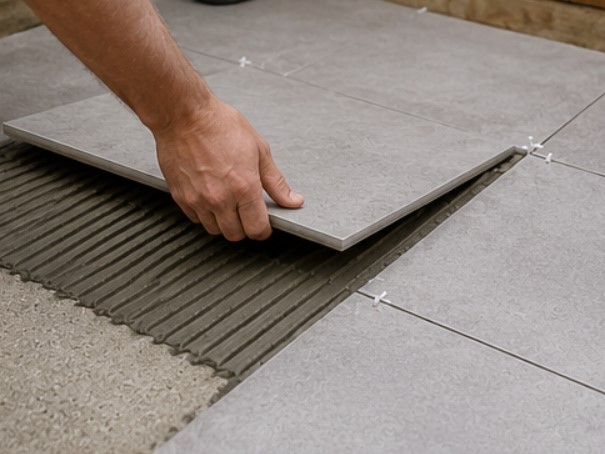
Depending on the adhesive system you are using, you will likely need to prime the concrete to control suction and improve the bond. Always follow the manufacturer's specific system.
5. Choose the right bedding method
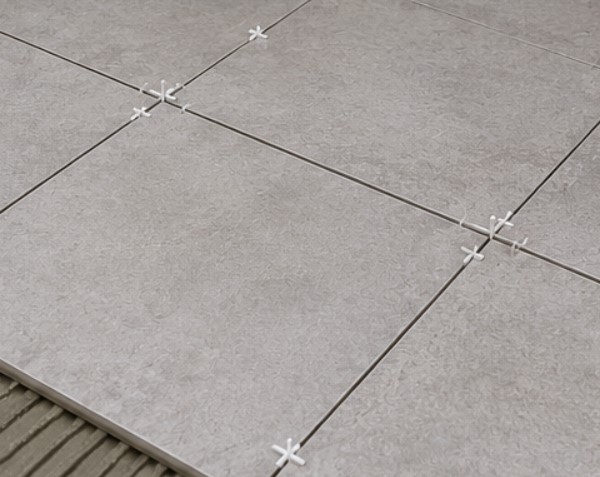
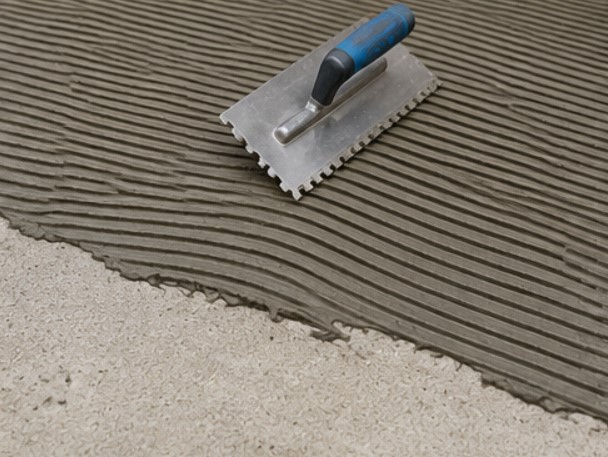
You absolutely must achieve full bed coverage. Spot-bedding (placing five blobs of adhesive under the tile) leaves voids where water collects, freezes, and eventually blows the tile off the base.
6. Use external-grade materials
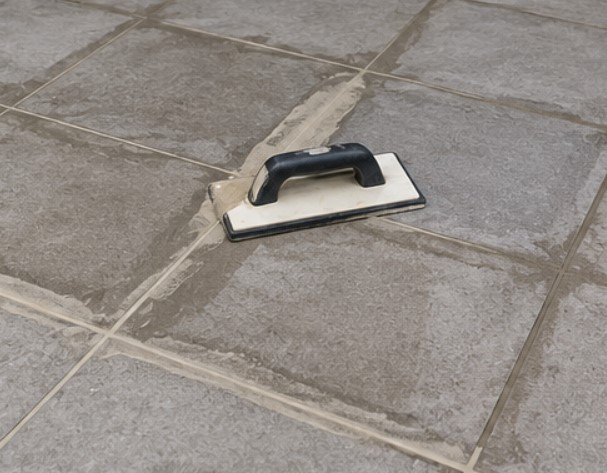
Indoor tile adhesive and grout will disintegrate outside. You need highly flexible, frost-resistant, cement-based tile adhesives and grouts designed specifically for external use.
7. Allow for drainage and edge details
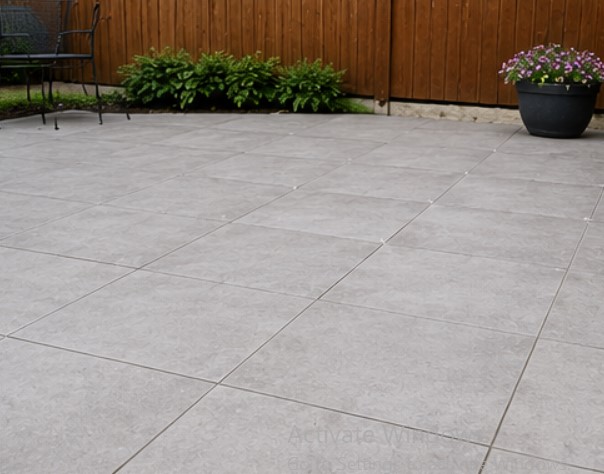
Plan exactly where the rainwater will go once it runs off the tiles. You also need movement joints around the perimeter to allow the patio to expand and contract naturally without buckling.
Porcelain slabs base options: overlay vs new sub-base
Sometimes the bravest decision is admitting defeat and starting fresh. So, what is the best porcelain tile base for your garden?
Overlaying existing concrete makes financial sense only if the slab is completely sound, features the correct falls, and leaves you with plenty of clearance below your DPC.
However, you should remove the concrete and rebuild the base if there is major cracking, signs of subsidence, incorrect levels, or if the concrete is simply weak and spalling. Starting from scratch allows us to excavate to the correct depth, lay a compacted MOT Type 1 sub-base, and bed the porcelain tiles on a solid sand and cement mortar mix. Proper groundwork is the only way to guarantee a patio that lasts for decades.
Porcelain tile on concrete: adhesive, primer and grout basics
Laying porcelain tile on concrete outdoors requires specialised materials. Because porcelain has virtually zero porosity, standard mortar will not stick to it.
To overcome this, the underside of every porcelain tile must be coated with a priming slurry just before laying. This acts as a bonding bridge between the tile and the adhesive or mortar bed. When choosing an adhesive, ensure it is classed as C2 (improved adhesion) and S1 or S2 (flexible) to cope with temperature fluctuations.
Finally, do not rush the curing process. Laying tiles in the pouring rain or during a freezing cold snap will ruin the adhesive's ability to cure properly.
Common mistakes we see
When we are called out to fix a failing patio in Greater Manchester, we usually see the same few errors.
The most common mistake is tiling straight onto filthy, unwashed concrete. Unsurprisingly, the tiles just lift right off a few months later. We also see plenty of patios laid completely flat with no fall, leading to huge puddles every time it rains, with the homeowner usually blaming the tiles rather than the installation. Spot-bedding is another notorious shortcut that saves a bit of adhesive but ultimately ruins the patio.
DIY vs hiring a pro
If you have a small, perfectly flat, clean concrete slab and you are an experienced DIYer, you might be okay tackling an overlay yourself.
However, professional help is strongly recommended when falls need correcting, you are dealing with large-format heavy tiles, or you are unsure if your base is actually structurally sound. Our team is always happy to take a look and give straightforward advice before you spend money on materials.
Frequently asked questions
Can I lay porcelain tile over concrete outside in the UK?
Yes, provided the concrete is structurally sound, crack-free, sloped away from the house, and thoroughly cleaned.
Do I need to prime concrete before tiling?
Usually, yes. An appropriate primer seals the concrete, stops it from drawing moisture out of the adhesive too quickly, and ensures a strong bond.
What’s the best adhesive for porcelain tile on concrete outdoors?
You need a flexible, frost-resistant, polymer-modified cementitious adhesive (look for C2 S1 or C2 S2 ratings).
Do I need a membrane over cracked concrete?
If there are minor, non-structural cracks, an anti-fracture membrane/anti fracture mat can prevent those cracks from reflecting through and creating damaged tiles.
Can I lay porcelain on painted or sealed concrete?
No. Paint and sealers prevent the tile adhesive from bonding to the concrete. They must be mechanically ground off before tiling.
Is it safe to use a rubber mallet on porcelain tiles?
A rubber mallet can be used to gently tap tiles into place during installation. This helps the tiles adhere properly to the adhesive without damaging the surface. Always use light, even pressure to avoid cracking the tiles.
What is the best way to clean excess grout from my porcelain tiles?
To clean excess grout from porcelain tiles, first allow the grout to partially dry and become firm but not fully set. Then, use a damp sponge to wipe away the grout residue in a circular motion. Rinse the sponge frequently with clean water during the process. For stubborn residue, a grout haze remover or a non-abrasive cleaner can be used after the grout has fully cured.
How do I make sure water doesn’t pool on porcelain tiles?
The base itself must have a built-in fall (a slight slope) of at least 1:80 to encourage water to run off the surface naturally.
Is a new concrete floor the best option or is there a better base for porcelain tiles?
A new concrete floor can be a suitable base for porcelain tiles if it is properly prepared. However, alternatives such as a cement board or a decoupling membrane might provide better results in certain situations. These options help prevent cracks from the substrate affecting the tiles by allowing movement and reducing stress transfer. If using a concrete floor, ensure it is level, cured, and free of contaminants before applying the tile adhesive.
Will porcelain tiles crack if the concrete cracks?
Yes. If the concrete beneath the tiles moves or cracks structurally, the porcelain bonded to it will likely crack as well.
What thickness porcelain is best for patios?
For outdoor patios, you should always use 20mm thick exterior-grade porcelain paving.
Ready to transform your patio?
Laying porcelain over concrete can be a great way to refresh your garden, but only if you get the preparation perfectly right. A premium tile deserves a premium base, and taking shortcuts on the groundwork is a false economy.
If you are unsure whether your concrete is suitable, we can pop round, assess it, and talk you through the best option. We pride ourselves on giving clear advice, executing proper groundwork, and leaving you with a tidy, beautiful finish.
Get in touch with the JW Paving team today for a free quote.

