
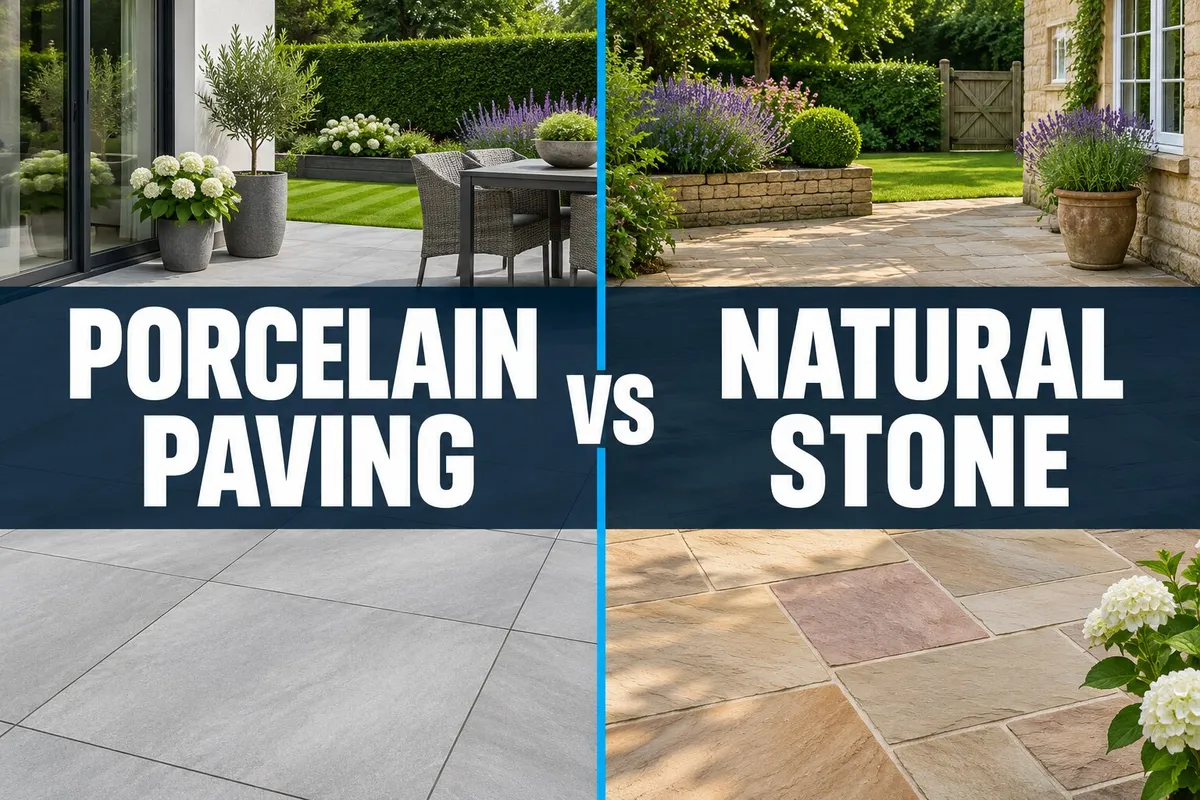
Porcelain Paving vs Natural Stone: Which is better for your patio?
Porcelain paving is the better choice if you want a low-maintenance, consistent-looking patio that resists staining and fading. Natural stone wins if you want character, texture and a surface that looks like it's always belonged in your garden. Neither material will perform well without proper groundwork, so the real decision often comes down to who's laying it, not just what you're laying.
You want a patio that looks stunning, doesn't turn into an ice rink the second it rains, and doesn't demand a power-wash every other weekend. Porcelain and natural stone can both tick those boxes—but only if you pick the right one for your garden and get it installed properly.
At JW Paving, we lay both materials across Altrincham, Sale, Timperley, Hale, Bowdon, Hale Barns, Urmston, Stretford, Didsbury and Chorlton, so we've seen what genuinely holds up in real Greater Manchester gardens (translation: lots of rain, the occasional heatwave, and clay soil that doesn't always cooperate). Here's our honest breakdown of porcelain paving vs natural stone, including cost, maintenance, slip resistance, and what actually matters when it's time to choose.
The quick answer (if you're impatient)
If you just want the cheat sheet:
Choose porcelain if you want low maintenance, a consistent colour, and a sleek, modern look.
Choose natural stone if you want variation, texture, and a classic, lived-in feel.
But here's the bit most comparison articles skip: the groundwork underneath your patio often matters more than which material sits on top. A beautifully chosen slab, badly installed, will let you down within a couple of winters. We'll come back to that.
What's the difference between porcelain paving and natural stone?
Porcelain paving
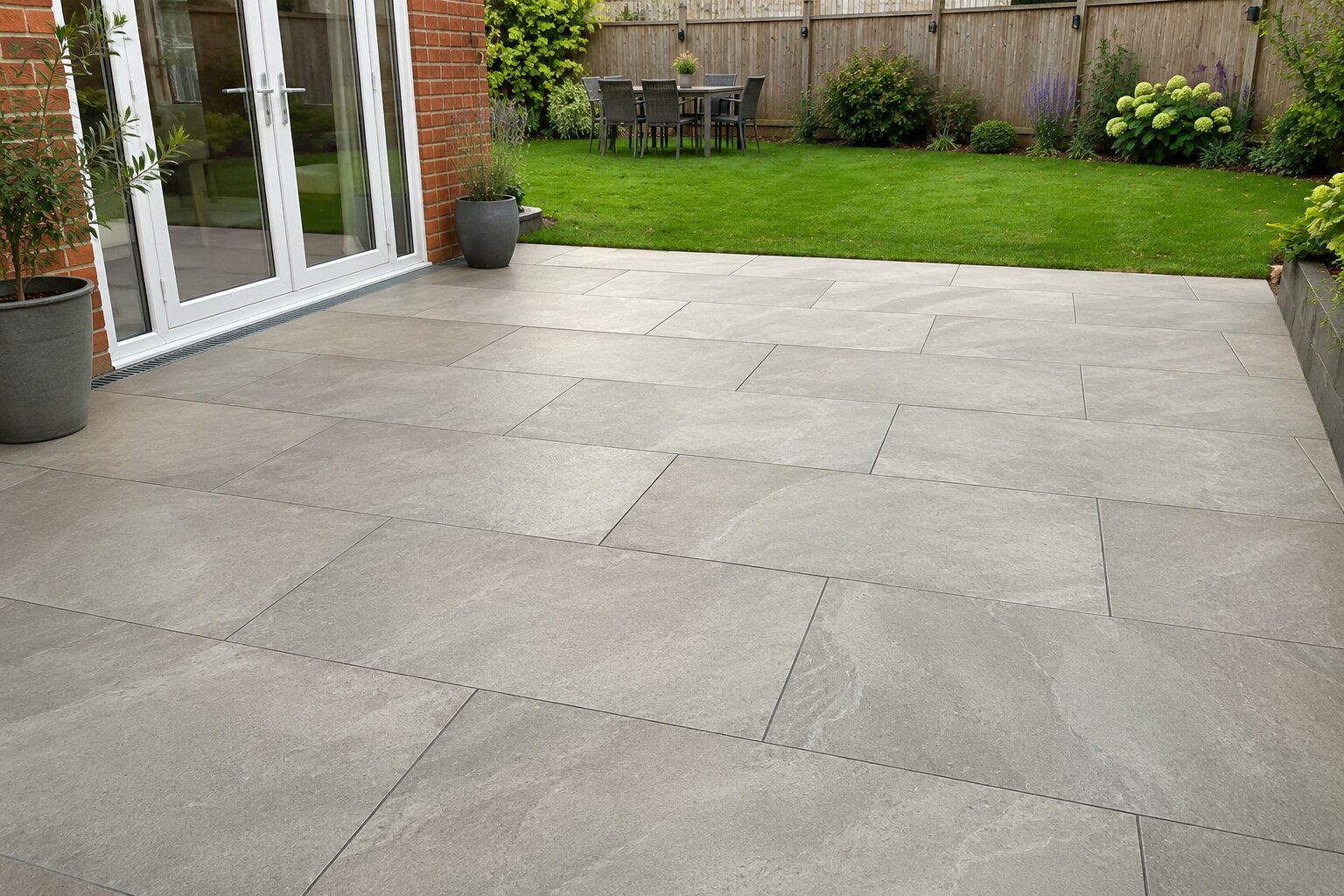
Porcelain paving is manufactured, not quarried. Clay is fired at extremely high temperatures until it becomes vitrified—essentially turned into a dense, glass-like material with very low porosity. This is why you'll often see it called vitrified porcelain or outdoor porcelain tiles. The slabs come in calibrated thickness, meaning each one is a consistent size, which makes for neat, even joints.
Natural stone (sandstone, limestone, granite)
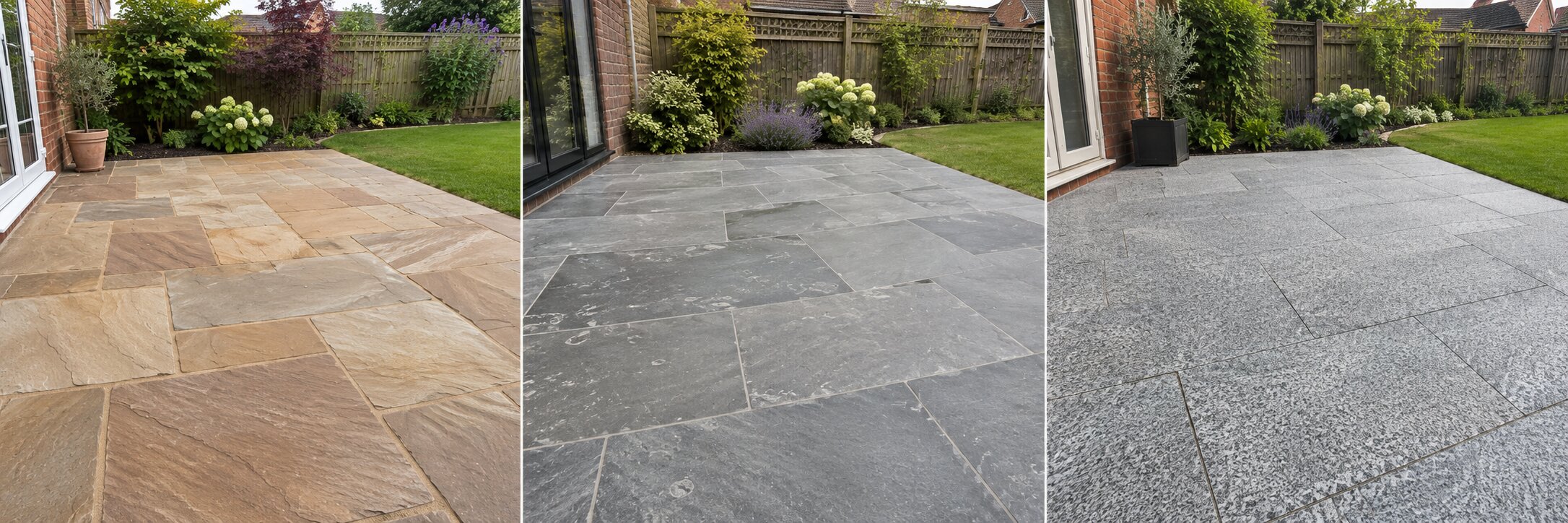
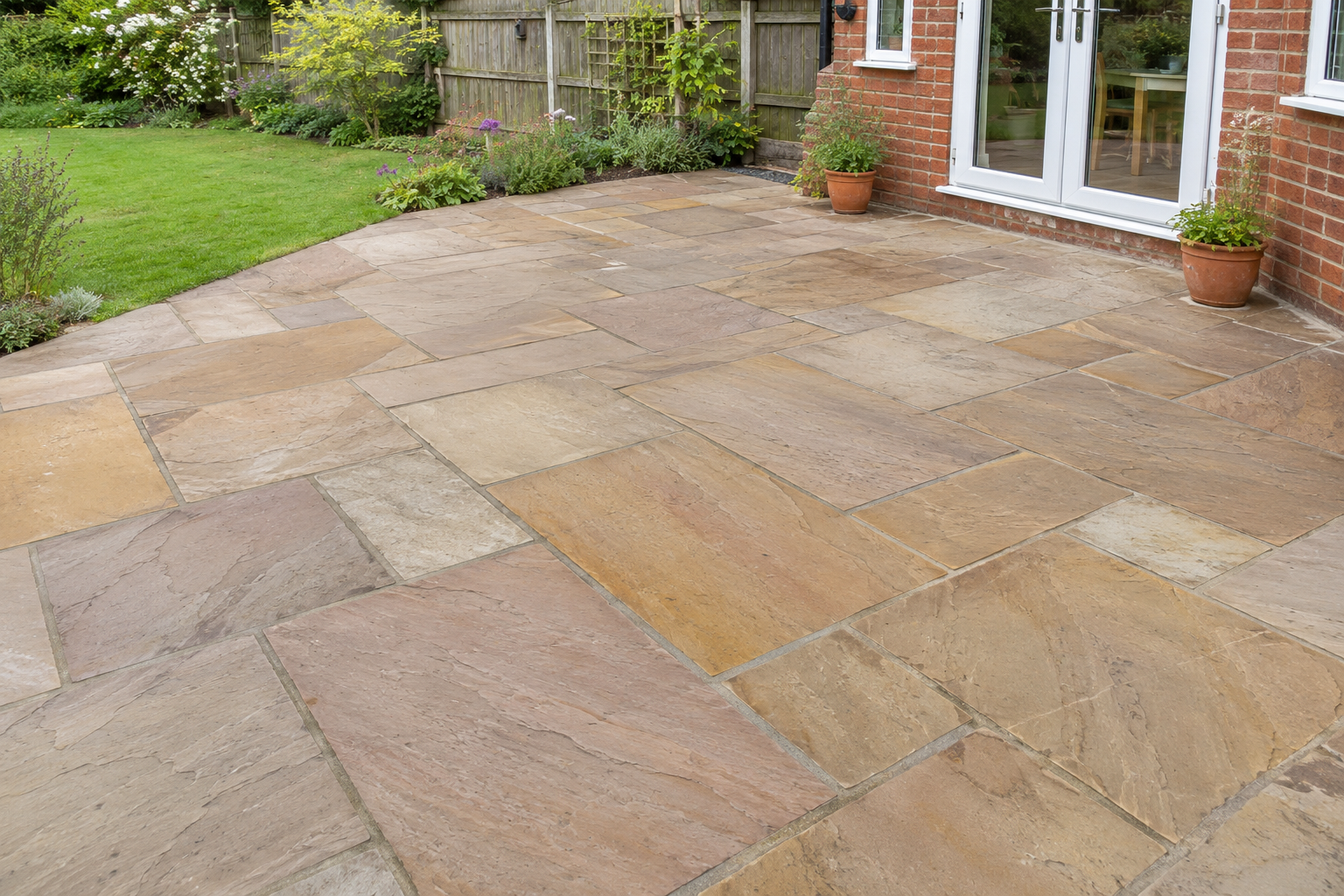
Natural stone is quarried straight from the ground, so no two slabs are identical. Sandstone is the UK's favourite patio material by a mile, with limestone and granite also popular depending on the look you're after. The natural variation in colour and texture is exactly what draws people to it—though it does mean an experienced installer needs to blend packs carefully so the finished patio doesn't look patchy.
Outdoor porcelain tiles pros and cons (the honest version)
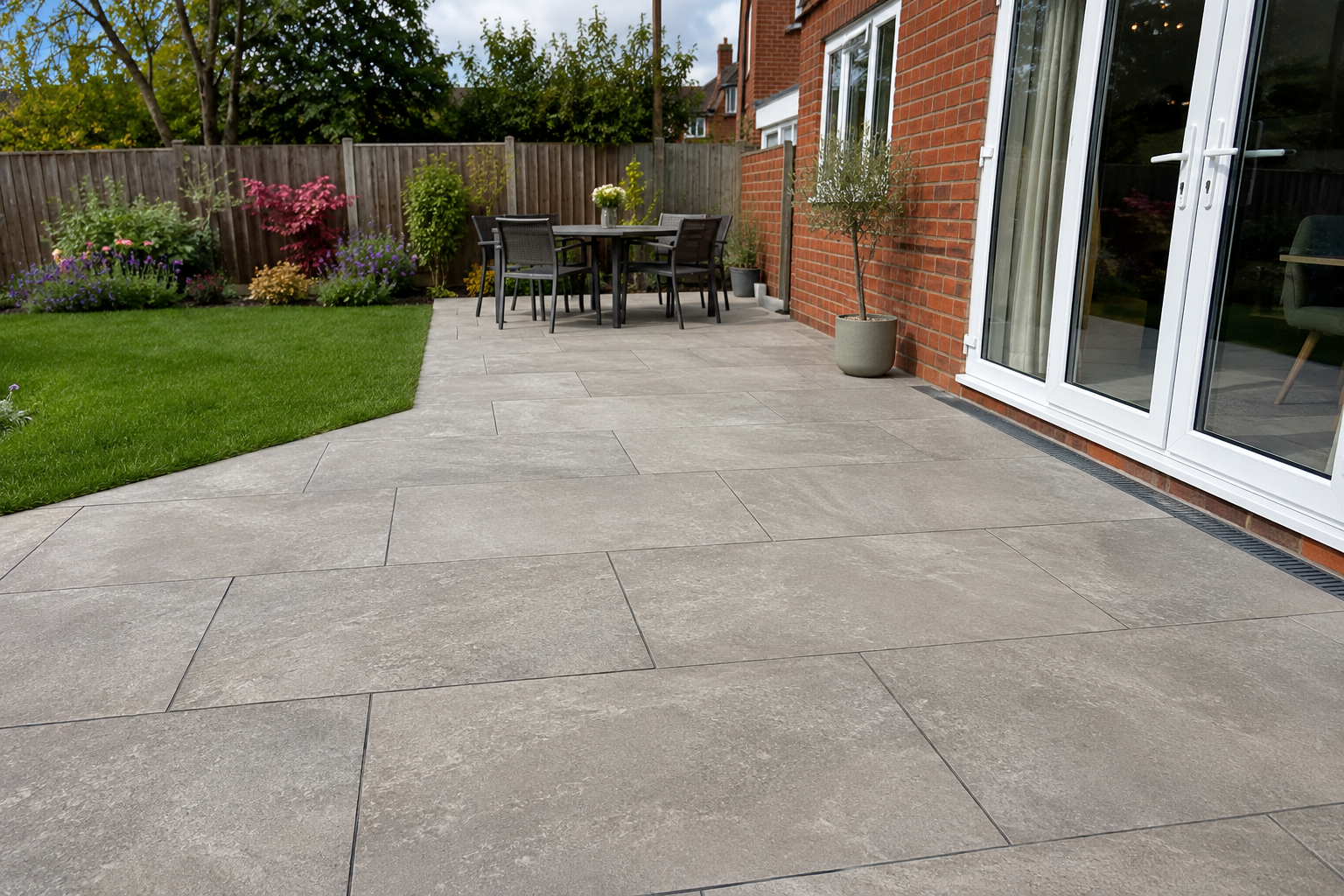
Pros
Low porosity means less staining, less algae, and generally easier upkeep
Consistent colour and thickness across every slab
Frost-resistant when installed correctly
A clean, contemporary finish that suits modern extensions and bi-fold doors
Cons
Needs the right installation approach—full-bed adhesive and a proper priming slurry on the back of each slab, not the shortcut "dot and dab" method
Cutting takes more skill (and time), which can affect your final cost
Some find it a touch too uniform for a cottage-style garden
Cheap imports with a poor-quality finish can be genuinely slippery, so the texture and outdoor rating matter
Natural stone pros and cons (and why people still love it)
Pros
Natural character and colour variation that blends beautifully with planting
Ages gracefully, developing a patina that many homeowners actually prefer
Often gives a softer, more traditional feel than porcelain
Cons
More porous, particularly some sandstones, so staining and algae need managing
May need sealing now and resealing every few years, depending on the stone
Requires a skilled eye during installation to blend slabs from different packs
Some stones weather or lighten unevenly over time
Is porcelain paving better than sandstone?
Honestly? It depends what "better" means to you.
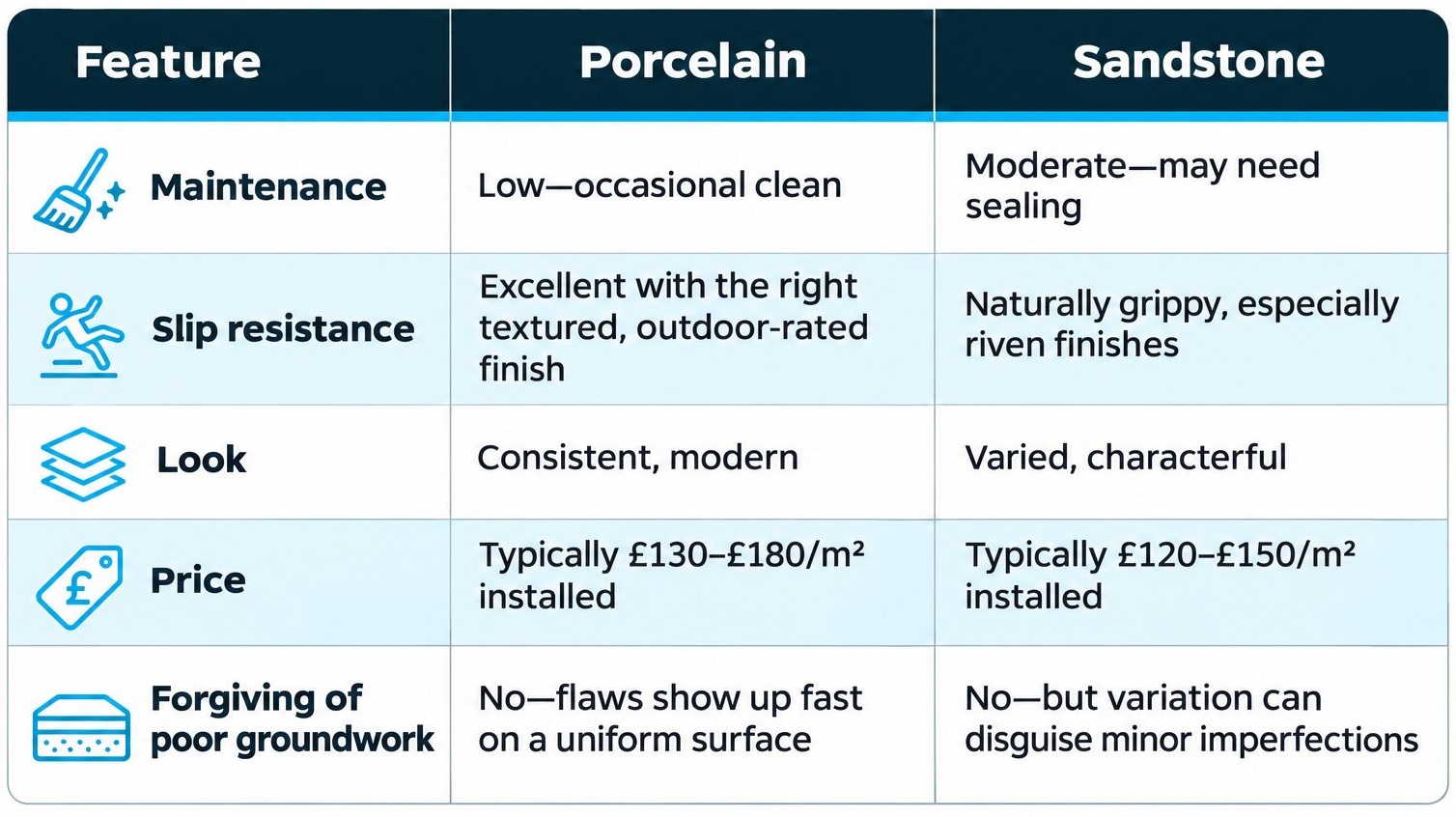
If low effort and a crisp finish are your priority, porcelain is likely your answer. If you want a garden that feels established and traditional, sandstone usually wins. Either way, neither material forgives a rushed sub-base.
Slip resistance and safety (because nobody wants a patio wipe-out)
Outdoor paving should carry a textured, slip-resistant finish—often referenced as an R11 rating—designed to perform even when wet. Porcelain with the correct outdoor finish grips just as well as textured natural stone in typical British weather. Natural stone with a riven surface also provides solid traction, though shaded, damp corners of the garden can encourage algae growth on either material if it's not cleaned regularly. Good drainage falls, laid correctly from day one, do more for safety than the material itself.
Maintenance and cleaning (what you'll actually be doing in year two)
Porcelain: A simple wash with warm water and a soft brush usually does the job. Avoid aggressive pressure washing directly into the joints, as it can disturb the jointing compound over time.
Natural stone: Expect a bit more involvement—periodic cleaning to tackle algae or moss, and depending on the stone, resealing every few years to protect against staining.
Low-effort maintenance checklist:
Sweep regularly to stop debris building up in joints
Clean spills promptly, especially oil or wine
Check jointing isn't cracking or washing out
Reseal natural stone as recommended for your specific type
Installation matters more than you think
This is the part we genuinely don't cut corners on, and it's also the part most comparison articles gloss over.
A proper patio build includes:
Excavating to the correct depth and removing soft, unstable ground
Laying a compacted sub-base (typically MOT Type 1) to the right levels
Getting drainage falls correct, so water runs away rather than pooling
Installing solid edging or restraints to stop the whole thing shifting over time
Finishing neatly, with tidy edges and a clean handover
Skip any of these steps and even premium porcelain or top-grade sandstone will start lifting, cracking or pooling water within a couple of winters.
Porcelain patio cost UK: what affects the price?
There's no single number that applies to every garden, but these are the variables that genuinely move the price:
Size of the patio and how easy (or tricky) access is
Material choice and slab thickness
How much base build-up is needed, plus any drainage work
Cutting complexity, especially around curves or bespoke patterns
Removing and disposing of an existing patio
Jointing method and materials used
Any extras—steps, raised beds, lighting, or new turf alongside the patio
A cheaper quote often means corners are being cut somewhere in that list. We'd always encourage homeowners to weigh up long-term value, not just the upfront number.
Design ideas worth considering
Porcelain: Large-format slabs with slim, rectified edges create that seamless indoor-outdoor look that works brilliantly alongside bi-fold doors.
Natural stone: Mixed slab sizes and tumbled edges suit a softer, cottage-style garden, especially paired with informal planting.
Either material can tie in beautifully with a new driveway, pathway, or freshly laid turf—something worth discussing if you're planning a wider garden refresh rather than just the patio itself.
Which should you choose?
Choose porcelain if low maintenance, a modern finish, and consistent colour matter most to you.
Choose natural stone if you want character, texture, and a surface that feels timeless.
Still torn? That's exactly what a site visit is for—seeing both materials in your actual garden, in your actual light, usually makes the decision much easier.
Frequently asked questions
Is porcelain paving better than sandstone for a patio?
Neither is objectively "better"—porcelain suits those wanting low maintenance and a modern finish, while sandstone suits those after natural character and a traditional look. Both perform well when installed correctly.
Do outdoor porcelain tiles get slippery when wet?
Not when they carry a proper textured, outdoor-rated finish. Cheap or poorly finished porcelain can be slippery, so it's worth checking the slip rating before you buy.
Does natural stone paving need sealing?
Many types benefit from sealing to reduce staining and algae growth, and resealing every few years. Some homeowners prefer to skip sealing and let the stone weather naturally instead.
What's the most low-maintenance patio option?
Porcelain, thanks to its low porosity. It still needs occasional cleaning, but it won't demand sealing or frequent algae treatment.
How long does a porcelain or natural stone patio last?
With proper installation, both can easily last 20 years or more. The sub-base and drainage are usually the deciding factor in longevity, not the surface material.
What's included in a proper patio base, and why does it matter?
A solid sub-base (typically compacted MOT Type 1), correct levels, and drainage falls that move water away from the house. Skip these and you'll see cracking, sinking or pooling within a few years.
How much does a porcelain patio cost in the UK?
Costs vary with size, access, base requirements and cutting complexity, so it's worth getting a tailored quote rather than relying on a generic average.
Can you lay porcelain over an existing patio?
Sometimes, but only if the existing surface is structurally sound, crack-free, and has adequate drainage falls. In many cases, starting fresh gives a longer-lasting result.
Ready to choose the right patio for your garden?
Whether you're leaning towards porcelain, sandstone, or you're still weighing it up, we're happy to talk it through. We'll take a look at your space, explain what we'd recommend and why, and give you a free, no-pressure quote.
Get in touch with the team at JW Paving by phone, email or drop us a message on WhatsApp. We cover Altrincham and the surrounding areas, including Sale, Timperley, Hale, Bowdon, Hale Barns, Urmston, Stretford, Didsbury and Chorlton—and we'd love to help you get your garden sorted properly, groundwork and all.

