
How to Prevent and Remove Weeds from Block Paving Permanently
Weeds in block paving root in the jointing sand and debris between blocks, not through the blocks themselves. To remove them permanently, clear existing weeds by hand, boiling water or a suitable weed killer, then refill the joints with kiln-dried or polymeric sand, seal where appropriate, and keep up regular sweeping.
One week your driveway looks smart. The next, there's a cheeky little dandelion poking up between the blocks like it pays the mortgage. Sound familiar? Weeds in block paving are one of the most common gripes we hear from homeowners across Altrincham and Greater Manchester, and the frustrating part is how quickly they come back after you've cleared them.
Here's the thing most people get wrong: weeds don't grow up through your paving. They take root in the sand and muck sitting in the joints between the blocks. That's actually good news, because it means learning how to prevent and remove weeds from block paving permanently is far more about the joints than the blocks. Get the joints right, keep on top of a little upkeep, and you'll spend a lot less time on your knees with a screwdriver.
In this guide, we'll walk you through quick fixes for when you need a tidy driveway by the weekend, the best long-term prevention methods, and when it's worth calling in the professionals.
Why weeds keep coming back in block paving
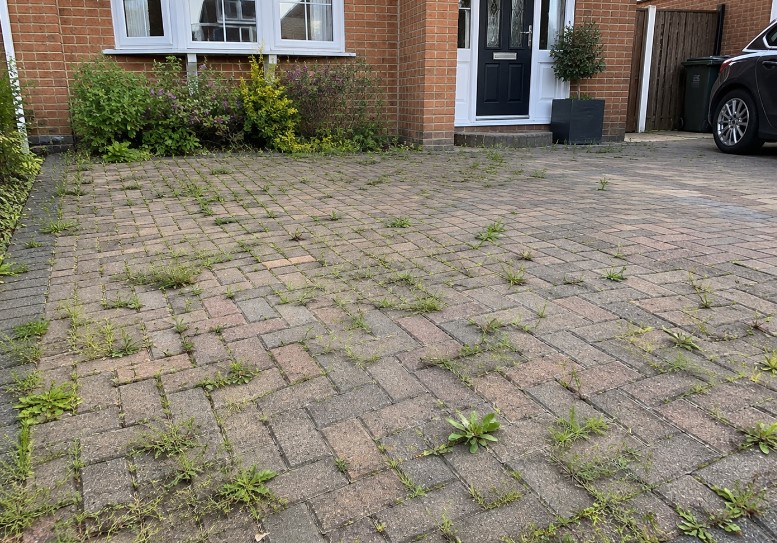
Before you can stop weeds growing in block paving, it helps to understand how they get there in the first place. Spoiler: it's rarely your fault.
Windblown seeds. Seeds are carried by the wind and birds, then settle into the gaps between your blocks. Once they land in a bit of sand, they're away.
Organic debris. Leaf litter, soil, moss and general dust collect in the joints and slowly turn into a lovely little seedbed. Weeds love it.
Washed-out jointing sand. Over the years, rain and foot traffic wash the sand out of the joints. The more open the gap, the more room seeds have to settle and root.
Poor drainage and shade. Damp, shaded spots encourage moss and algae, which then create the perfect conditions for weeds to follow.
Movement and settlement. If blocks start to shift or sink, the joints widen and the problem gets worse.
So while a weed killer deals with what you can see, the real fix is tackling those open, debris-filled joints.
The quick wins (for when you need it to look better this weekend)
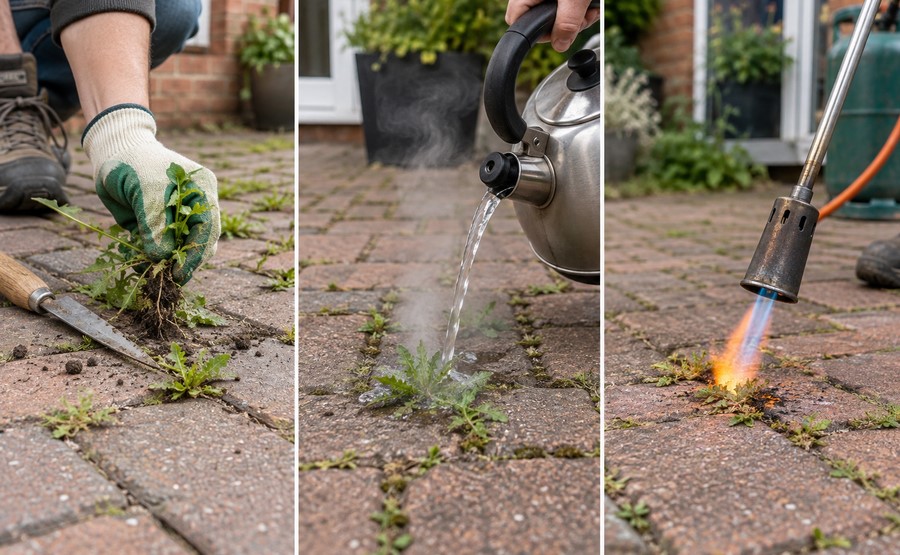
Sometimes you just need the driveway looking respectable before visitors arrive. These methods work fast, though most are short-term unless you follow up with proper prevention.
Hand weeding. Old-fashioned but effective. Wait until after rain when the ground is soft, then pull the weeds out with the roots intact. A patio knife or weeding tool makes light work of stubborn joints.
Boiling water. A kettle of boiling water poured straight onto the weeds damages the plant cells and kills them off within a few days. Cheap, chemical-free and surprisingly satisfying. Just mind your feet.
Weed burners. A flame weeder scorches weeds without any chemicals and covers larger areas quickly. Handy, but keep it well away from anything you'd rather not set alight.
A quick word on what not to do: don't scrape all the jointing sand out and leave the gaps empty, thinking you've won. Empty joints are an open invitation for the next batch of seeds. And don't reach for the pressure washer without a plan to re-sand afterwards (more on that shortly).
The best weed killer for block paving UK homeowners can use
If you'd rather reach for a spray, it pays to know what you're buying. There are two main types of weed killer, and they behave very differently.
Contact weed killers kill only the parts of the plant they touch. They work fast, often within a day or two, but they don't linger in the ground, so new weeds can sprout in the same spot. Expect to reapply.
Systemic (residual) weed killers are absorbed into the plant and travel down to the roots, killing the whole thing. They also stay active in the ground for a while, which helps prevent regrowth. This makes them a strong choice for a driveway that sits away from your lawn and borders.
The two most common active ingredients you'll find in the UK are glyphosate and acetic acid. Acetic acid is essentially very strong vinegar and a more environmentally considerate option, while glyphosate-based products tend to be more powerful.
Whichever you choose, timing matters. Apply between March and October on a dry, calm day. Rain will dilute the product before it has chance to work, and wind can carry it onto plants you actually like. Always follow the label, and keep children and pets off treated areas until it's safe.
One honest caveat: weed killer treats the symptom, not the cause. If your joints are open and full of debris, the weeds will keep coming. The lasting fix lies in the jointing.
Pressure washing block paving: helpful or a habit worth breaking?
A pressure washer can work wonders on grime, moss and algae, and there's genuine joy in watching years of muck lift away. But it comes with a catch.
Blast the paving too hard and you'll strip out the jointing sand, loosen the blocks and open up the very gaps that weeds love. Do it too often and you can shorten the life of the whole surface.
If you're going to pressure wash, keep the pressure low, hold the nozzle at roughly a 30-degree angle, and move steadily rather than hammering one spot. Most importantly, re-sand the joints afterwards. That single step is the difference between a clean driveway and a fresh weed problem.
Removing moss from driveway paving (and keeping it gone)
Moss is the damp-loving cousin of weeds, and it thrives in shaded, north-facing or poorly drained areas. It also makes paving slippery, so it's worth dealing with early.
Start by brushing away loose moss with a stiff broom, then rinse the area. For anything more stubborn, a paving cleaner, diluted white vinegar or a dedicated algae treatment will do the job. If you use a diluted bleach solution, go gently, as block paving is porous and can discolour with repeated use.
To keep moss from returning, sweep regularly to clear organic debris, and trim back any overhanging plants to let more light and air reach the surface. Less shade and damp means less moss.
The long-term fix: block paving weed prevention that actually lasts
Here's where you win the war rather than just the odd battle. Proper block paving weed prevention comes down to the joints and what's happening beneath the surface.

1. Re-sand the joints properly. Filling the joints with fresh kiln-dried sand locks the blocks together and leaves far less room for seeds to settle. It's the single most effective thing most homeowners overlook.
2. Consider polymeric sand. Unlike standard kiln-dried sand, polymeric sand contains binding agents that harden when wet. This makes it much harder for weeds to break through and for the sand to wash away. It's not magic, but it noticeably improves weed resistance.
3. Seal the paving (where it suits). A quality sealant binds the jointing sand, helps resist staining and makes future cleaning easier. It does need reapplying every year or two, and it isn't right for every driveway, especially if drainage is poor. Apply it after a thorough clean, once the surface is completely dry.
4. Fix the underlying issues. If blocks are rocking, sinking or water is pooling, weeds will keep returning no matter how much you spray. Widening joints and poor drainage are structural problems, and they're a common reason DIY fixes don't stick.
A simple maintenance routine to keep weeds at bay
None of this needs to take over your weekends. A little consistency goes a long way.
Weekly-ish: give the paving a quick sweep, especially after mowing or a storm. Clearing debris stops it composting down into the joints.
After any wash: top up the jointing sand. Always.
Damp months: treat for moss and algae before they take hold.
Autumn: deal with fallen leaves promptly rather than letting them sit and rot in the gaps.
Spring: a proper deep clean clears winter grime and sets the surface up for the year.
When it's time to call in the professionals
Sometimes the weeds are a symptom of something bigger. It's worth getting a professional opinion if:
the joints are empty or eroded across large areas
blocks are uneven, sinking or rocking underfoot
water pools on the surface after rain
weeds keep pushing through the same cracks or edges, often a sign of failing edging or groundwork
At JW Paving, we work with homeowners right across Altrincham and Greater Manchester, including Sale, Timperley, Hale, Bowdon, Urmston and Stretford. Whether it's a straightforward tidy-up and re-sand, joint stabilisation, sorting the drainage, or a full lift and relay, we'll give you honest advice and get the groundwork right. Good preparation and proper edging are what keep paving looking tidy for the long haul, and we're highly rated on Google for exactly that kind of careful, no-nonsense work.
Frequently asked questions
Do weeds grow through block paving or just between the joints?
Almost always just between the joints. Weed seeds blow in and settle in the jointing sand, then root there. They don't grow up through solid blocks, which is why keeping the joints full and clean is the key to prevention.
How do I stop weeds growing in block paving permanently?
There's no genuine "never again" solution in the British climate, but you can get very close. Refill the joints with kiln-dried or polymeric sand, consider sealing the surface, fix any drainage or movement issues, and keep up a little regular sweeping. That combination gives you long-term control.
What's the best weed killer for block paving in the UK?
It depends on your situation. A systemic (residual) weed killer is best for a driveway sitting away from your lawn and borders, as it kills to the root and helps prevent regrowth. Glyphosate-based products are powerful, while acetic acid options are more environmentally friendly. Always follow the label.
Will pressure washing get rid of weeds for good?
No. Pressure washing cleans the surface and clears debris, but it also strips out jointing sand and can open up the joints for new seeds. If you pressure wash, always re-sand the joints afterwards.
Is kiln-dried sand enough to prevent weeds?
It goes a long way. Full joints leave far less room for seeds to settle, so keeping them topped up makes a real difference. For extra resistance, polymeric sand hardens when wet and is even harder for weeds to break through.
Can I use salt or vinegar on block paving?
Both can kill weeds, but use them with care. Salt can damage nearby planting and cause runoff issues, while strong vinegar can affect the paving over time. They're better suited to small, isolated patches than whole driveways.
How often should I re-sand block paving joints?
Top up whenever you notice the sand looking low, and always after a pressure wash. For most driveways, checking the joints once or twice a year keeps things stable.
Should I seal my block paving to prevent weeds and moss?
Sealing can help by binding the jointing sand, reducing weed growth and making cleaning easier. It's best applied to a clean, dry surface and reapplied every year or two. It isn't essential for every driveway, so if you're unsure, it's worth getting a professional view first.
Ready to reclaim your driveway?
If your block paving's looking tired, the joints are washing out, or you're simply fed up fighting the same weeds every few weeks, we'd love to help. At JW Paving, you'll get straightforward advice, clear communication and a practical plan, whether that's a tidy-up and re-sand or a full lift and relay.
Get in touch with the team by phone or request a free quote, and let's get your paving looking its best again.

